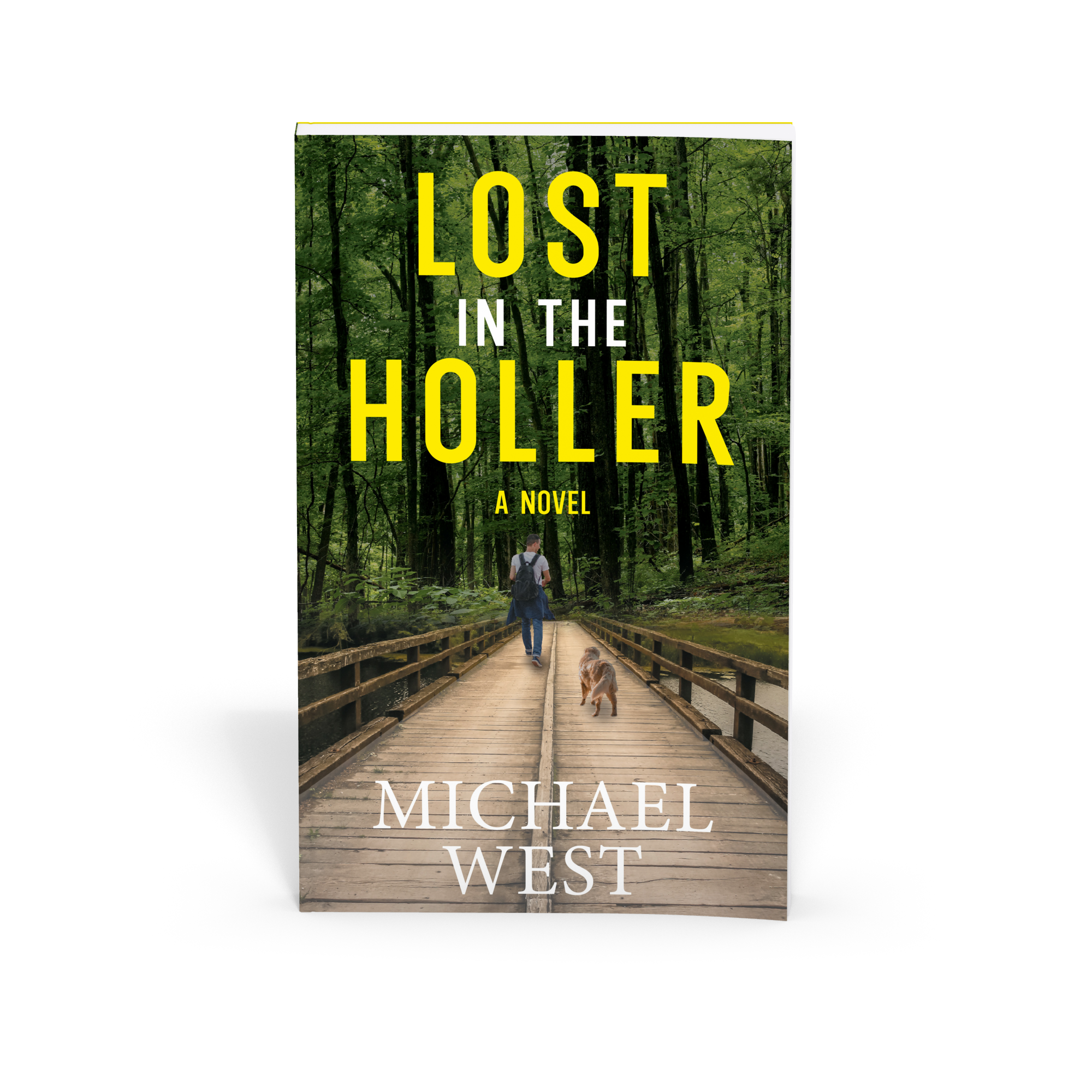
Lost in the Holler
A Southern Gothic Family Saga that Reveals its
Secrets Like a Nesting Doll
Reviews
“Community and justice go under a microscope in this thought-provoking novel.” – Kirkus Reviews
“The author sets up a compelling dynamic in which RJ must determine what he can live without knowing; the town isn’t going to change, so he must. Everything comes together in a shocking conclusion that readers won’t soon forget.” – Kirkus Reviews
"Stylistically, West favors clarity over flourish. His prose is direct and grounded in Appalachian cadence without overplaying dialect. The pacing is steady, building tension through revelation rather than spectacle. Some of the strongest scenes are quiet — a shared meal, a late-night conversation, a box of letters opened in a cedar chest. These moments root the mystery in emotional reality."- BookTrib
In the News
Book Passage
Momma had also stood the test of time. She was now seventy years old, and I could tell her energy level had diminished. Her health seemed good and her mind sharp; she just didn’t have the gumption to work like she had for the better part of fifty years. Despite her slow pace, her hug reminded me that Momma was tough. She was soft to the touch, but firm when she wrapped her bony arms around you. She no longer stood upright, and arthritis drew her fingers in. It looked like she should be in pain, but if she was, she wouldn’t have ever said it. In her mind, there was no time for fussing about problems. “It wouldn’t change anything anyway.”
“Momma, how are you feeling?” I asked her as we finally settled into the outdoor rocking chairs.
“I’m good, honey, been canning most of the week and am just a little tired.”
“Health good?” I tried again.
“Everything is great. Tell me about this little dog.” She responded, ready to move on and talk about anything but herself.
We spent the next hour talking about Winston and the dogs we used to have on the farm. There were so many that we couldn’t remember all of them by name; dogs came and went, the memorable ones left an impression; they were either especially loyal, or rotten. My favorite was a stray that wandered onto our property looking for anything other than what he had. He wasn’t striking in appearance; in fact, he was a bit ugly. Not knowing what to name the homily dog, and short on creativity, I named him Davy in honor of Davy Crocket. Despite his appearance and uninvited arrival, he captured my heart from the beginning. His temperament and desire never to leave my side bonded us together, and we became inseparable. I went nowhere without him, except for church; we wore our best on Sundays, and no matter how many times I gave Davy a bath, he was never clean enough for respectable folks. On a farm with livestock everywhere you look, dogs had a special place; they were there as companions, and, if they were talented, they could help herd the cows. Cows, pigs, and chickens didn’t rise to the high level of regard that dogs possessed. Livestock existed to provide. Daddy had two quarter horses he used to move cattle and round up the occasional runaway cow: horses didn’t warrant special names at our place. We called the two I remember, Brown and Spotted.
I hadn’t thought about Davy for a long time. Funny thing about having a previously unloved dog as your pet, you’re likely to experience a connection that may never happen again. As I retold stories of Davy, Momma sat quietly, rocked in her chair, and listened to me with no distractions or thoughts beyond our front porch. This was new to me. I wasn’t used to people taking time to talk without interruptions. I usually saw the person I was talking to grab their cell phone or look around to see who else was there. On the front porch with Momma, for the first time in years, the world was tiny.
Rocking gently as the sun faded over the mountains, I noticed that the growing shadows, not the beeping of notifications on my phone, marked the passing minutes. As such, you felt like time passed slowly, and then you noticed you had been talking about a dog you cared for fifteen years ago for the better part of an hour. I couldn’t remember when I had spent an uninterrupted hour with someone casually talking about nothing. Momma thought little of it, but I was keenly aware of the oddity of spending time engaged in meaningless conversation. I hadn’t even settled into my room and was already aware that time, its passage, and how I spent it were going to be the biggest change for me.